Segurança e materiais
Safety and materials
Children's footwear is held to tighter chemical limits than adult footwear, and to rules about small parts that adult footwear does not have at all. This page states which rules, at what limits, tested how — and where our competence ends.
Last updated 15 August 2026 · Governing law: Portuguese law
The five chemical checks
Every product page carries these five, each with its limit, its method, and whether it applies to that particular pair. Where a restriction has nothing to apply to — no leather, no metal parts, no plasticised components — we say so instead of leaving a gap.

Chromium VI in leather
Limit ≤ 3 mg/kg · Method EN ISO 17075-1
Hexavalent chromium can form during and after chrome tanning. Every leather batch is tested before it is cut, and it is retested if leather has been in store for a long period, because chromium VI can develop over time in badly stored hides. REACH Annex XVII, entry 47.
Azo dyes
Limit ≤ 30 mg/kg of releasable aromatic amines · Method EN ISO 14362-1 for textile, EN ISO 17234-1 for leather
Certain azo dyes break down into aromatic amines that are restricted. Applies to every dyed component that touches skin, in linings as well as uppers. REACH Annex XVII, entry 43.
Nickel release
Limit ≤ 0.5 µg/cm² per week · Method EN 1811, after the EN 12472 wear and corrosion pre-treatment
Applies to eyelets, buckles and rivets in prolonged contact with skin. The pre-treatment matters: a part can pass when new and fail after simulated wear, which is why the test is run after it rather than before. REACH Annex XVII, entry 27.
Phthalates
Limit DEHP + DBP + BBP ≤ 0.1 % by weight · Method EN 14372 / ISO 14389
Applies to plasticised components. The stricter limit for children's articles is the one we apply, and where a pair contains no plasticised PVC at all the product page says so rather than leaving the row blank. REACH Annex XVII, entry 51.
Free formaldehyde
Limit ≤ 16 mg/kg on parts in direct skin contact · Method EN ISO 14184-1
Linings and insoles are the components that sit against a foot for hours, so they are the ones we test. Children's limits are tighter than the general textile limits for the same reason.
A product cannot be listed on this site until all five are resolved. That is enforced by the code that renders the catalogue, not by a person ticking a box.
Small parts and under three
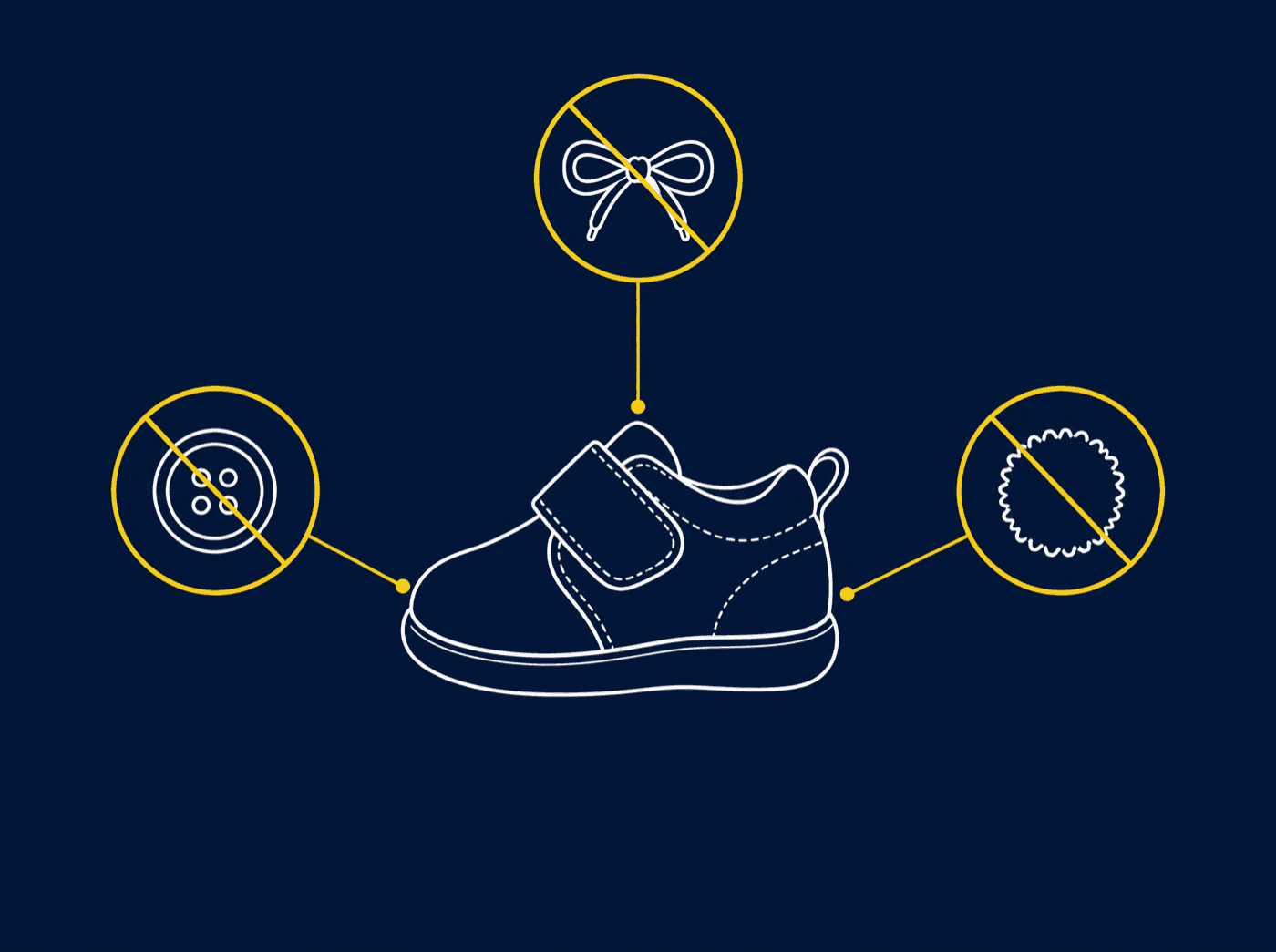
Nothing sold for children under three carries a removable part. No decorative button, bead, pom-pom, sequin or metal badge, and no logo plate that could be prised off. The First Walkers line is built this way from the last upward rather than having parts removed from an existing design.
This is a swallowing and choking rule, not a styling preference. Anything that can come off a shoe worn by a child who still puts things in their mouth is a hazard, and the simplest way to comply is not to attach anything in the first place.
Decorative parts and the pull test
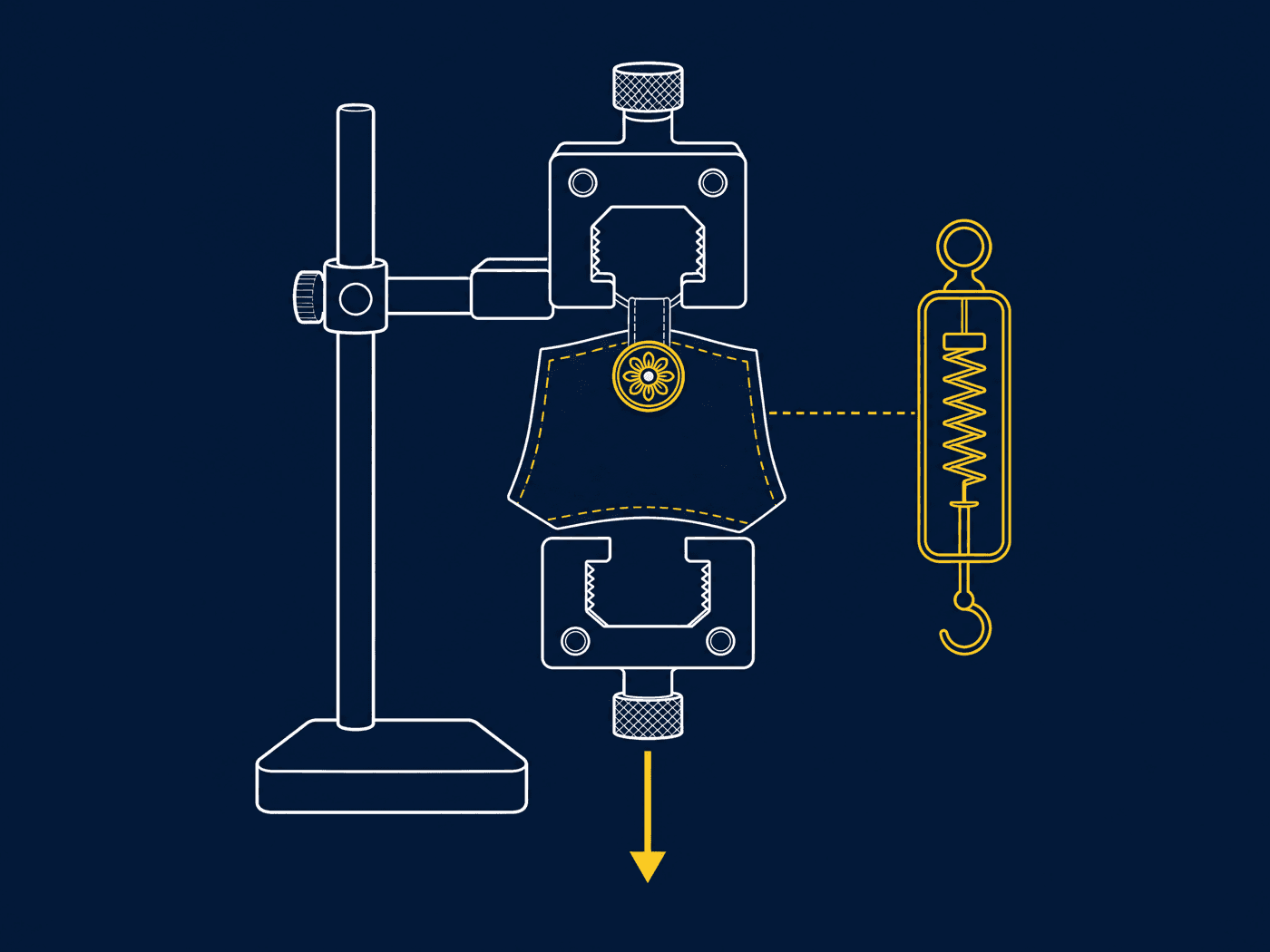
Two products in the range carry an attached decorative part: a stitched leather side flash on the Everyday Premium and a stitched leather rosette on the Sandal Premium. Both:
- passed a 90 N pull test held for ten seconds, applied through a clamp at the least favourable angle;
- are marked not suitable for children under three on the product page, in the bag and again at checkout, with an icon and with words rather than by colour alone;
- are stitched rather than glued, so a failure would be visible before it detached.
If a decorative part ever does come off one of our shoes, that is a defect under the legal guarantee and we want to hear about it the same day.
Laces
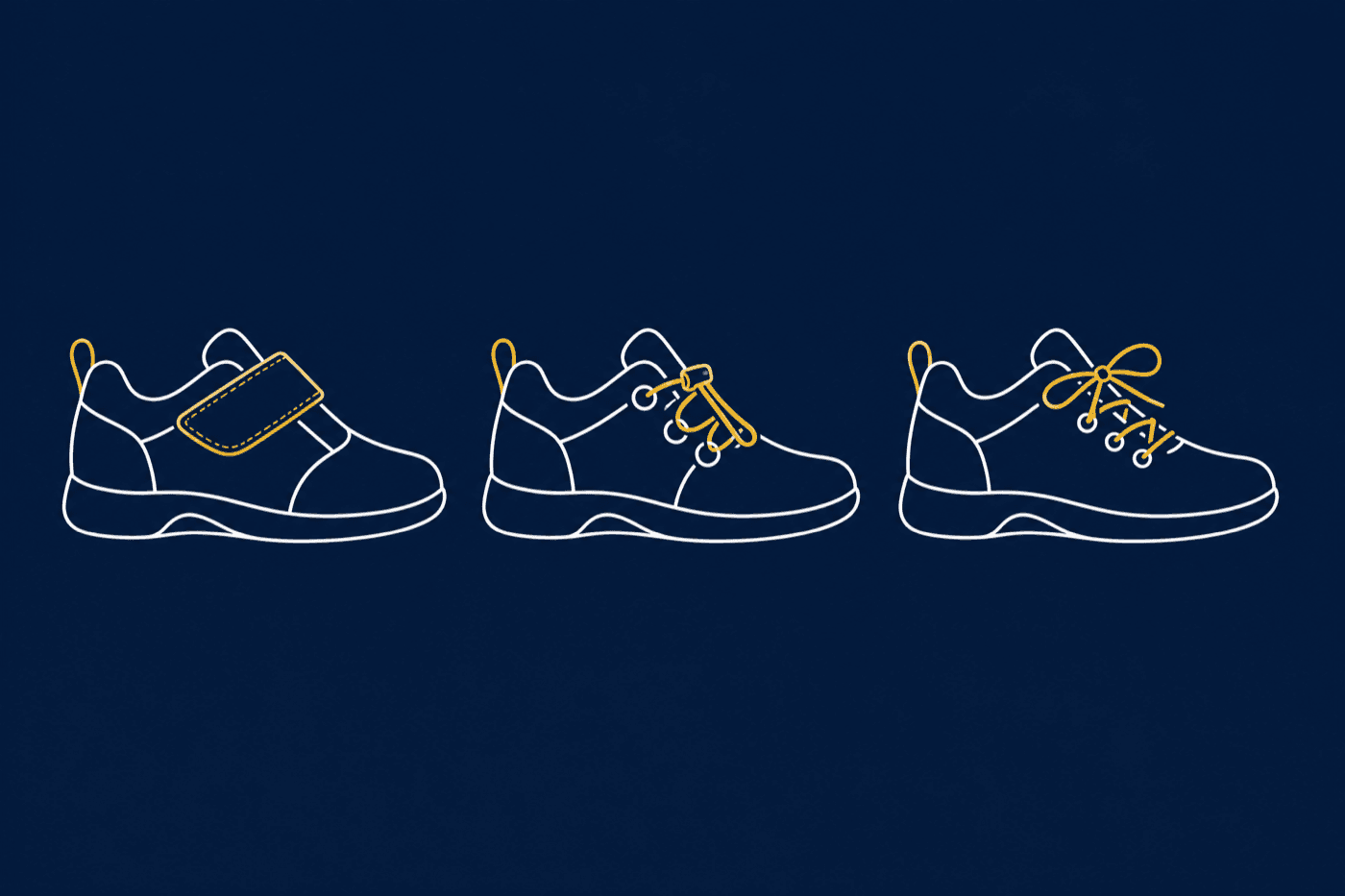
- No laces at all under three years. Those lines close with hook-and-loop or with a fixed elastic cord.
- Laces are capped in length where we do use them: 65 cm on the Everyday Lace, 75 cm on the school shoes. Long enough to tie, short enough that the ends do not reach the ground.
- Elastic cords are fixed at both ends and cannot be pulled free of the shoe.
The material label
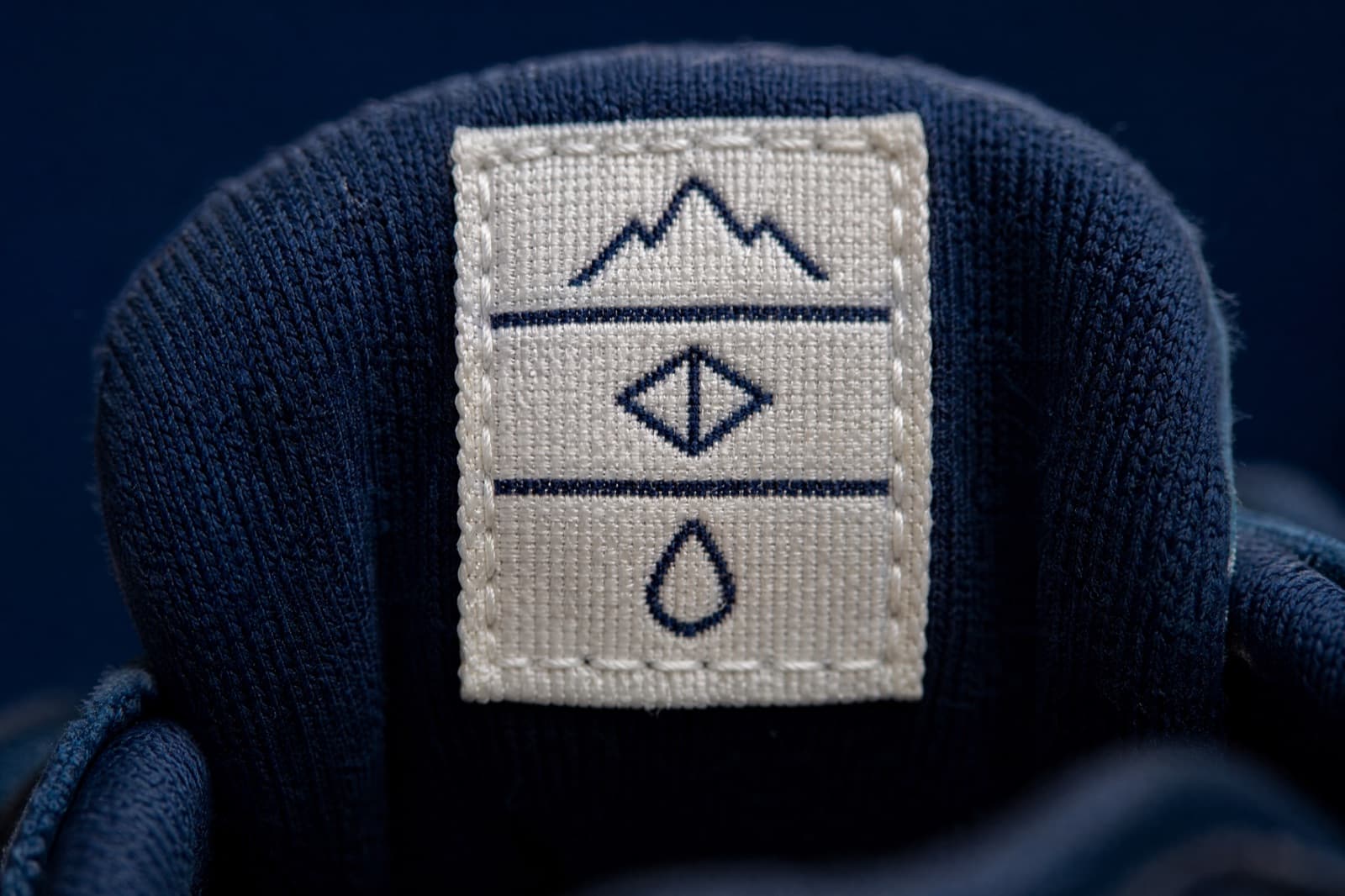
European law requires footwear to carry a three-row label covering the upper, the lining and insole, and the outsole, each identified as leather, coated leather, textile or other materials, using standard pictograms. The label is stitched inside every pair, and the same three rows are written out in words on every product page — because a pictogram you have to decode is not information you have before you buy.
Each row names the material making up at least 80 % of that part. Where nothing reaches 80 %, the two principal materials are named. The word couro is used only where a part is leather in the legal sense — hide from an animal. A coated or synthetic material is never described as leather anywhere on this site.
Country of manufacture is stated on the same label and on your invoice. We do not use origin as a marketing claim.
How we measure the flex angle
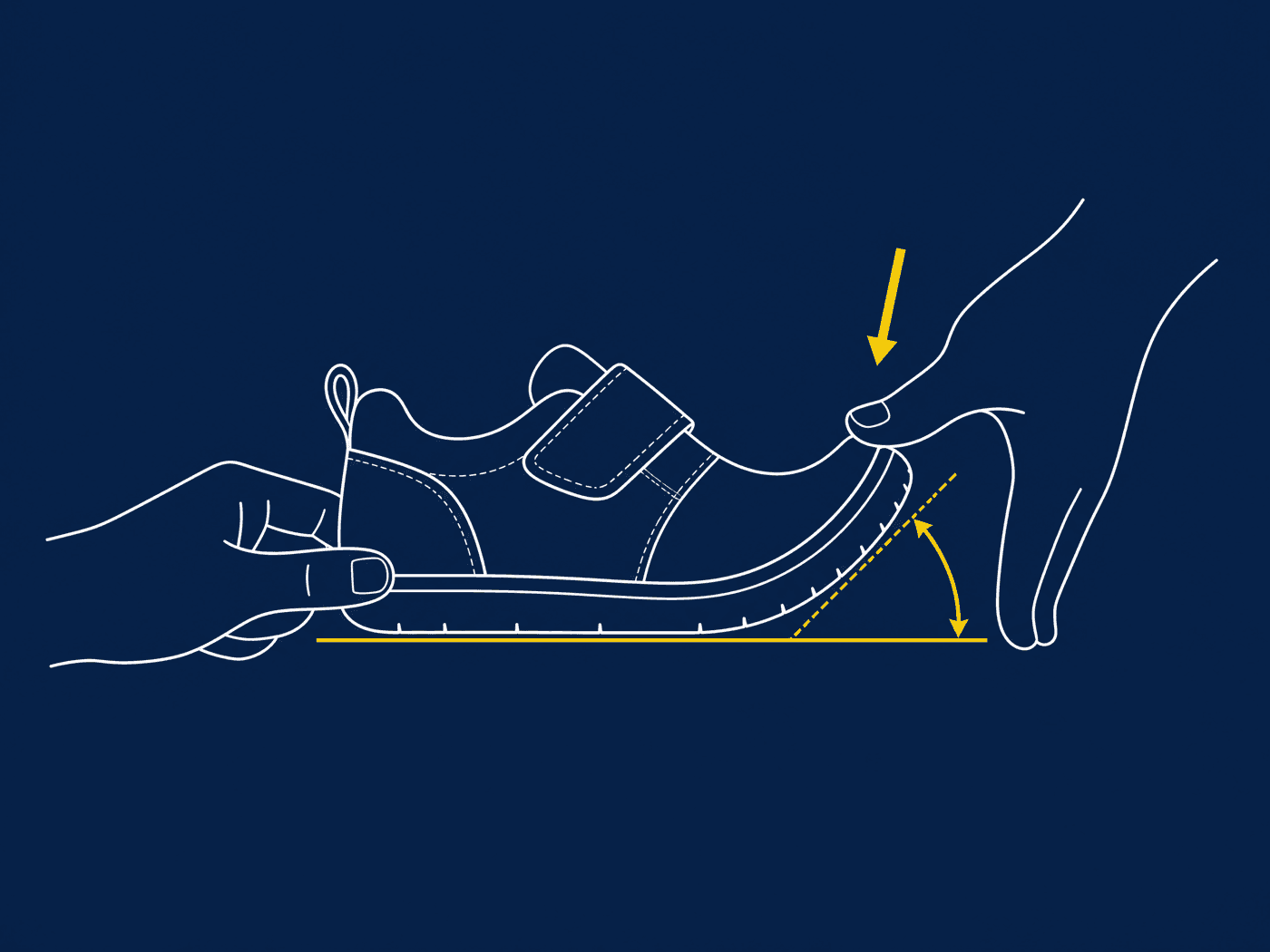
Hold the heel flat. Press the toe upward until the sole resists. Read the angle between the flat sole line and the lifted forefoot. Same person, same batch check, 20 °C.
It is a hand measurement and we describe it as one. A larger angle means the sole folds more easily: 55° on the softest first-walker sole, 35° on a school shoe. We publish the method next to the number so you can repeat it on any pair already in your hallway and compare like with like.
What the number is not. It is a description of how a sole behaves under a hand. It is not a statement about what a sole does for a child, and we do not make one.
Water claims and their conditions
Where a pair carries a water rating, the test conditions are printed immediately next to it — which spray test, at what temperature, over how long, and what was excluded. A moulded rubber boot tested to EN ISO 20344 clause 5.15 for three hours in 30 mm of standing water is a specific result under specific conditions, and it is not a promise that feet stay dry in every situation.
Where a pair has no rating, we make no water claim at all rather than an unqualified one.
Growth is not a defect
This distinction sits on the legal guarantee page in full, and it is repeated here because it is a safety question as much as a commercial one: a shoe that has become too small should be replaced, not endured.
Not a defect: the shoe has become too small; the tread has worn down; the toe has scuffed; leather has darkened or creased; gum rubber has yellowed.
A defect, and covered: the sole has come away from the upper; the sole has split; a hook-and-loop strap no longer holds; an eyelet has pulled out; a buckle has broken; a seam has opened; a decorative part has detached.
Practically: measure again every eight to twelve weeks depending on age, and when the gap in front of the longest toe is down to about 4 mm, the pair is finished regardless of how much tread is left on it.
No characters, no trademarks
Children’s footwear is one of the categories where licensed characters, film tie-ins and lookalike branding turn up most often, and where infringement is most common.
Nothing in this catalogue carries any of it. No cartoon, no character, no film or television property, no third-party trademark, logo, pattern or design. Every product is reviewed against that rule before it is listed, and it applies to the printed packaging as well as to the shoes.
Test reports
Batch test reports for any of the five chemical restrictions, and pull test records for the decorative parts, are available on request. Write to support@poderinfantilshoes.homes with the product code and, if you have it, the batch code printed inside the shoe.
Schools, nurseries and retailers who need documentation with a bulk order should say so on the bulk enquiry form so that it travels with the delivery rather than following it.
Where our expertise stops
We describe how our shoes are made. We don't give advice about your child's feet. If you have concerns, ask a healthcare professional.
We are shoemakers. We can tell you what a shoe is made of, how far its sole bends, how much room it leaves and what it weighs. We cannot tell you what any of that will do for a particular child, and a shop that offers to is selling you something other than shoes.
We do not sell orthopaedic, corrective or therapeutic footwear, and nothing here is a medical device. Products covered by the 3-year legal guarantee are ordinary consumer footwear and are described as such throughout.
Contactos: support@poderinfantilshoes.homes · +351 256 871 538
Livro de Reclamações Eletrónico: livroreclamacoes.pt