School Shoes · C-07
School Premium
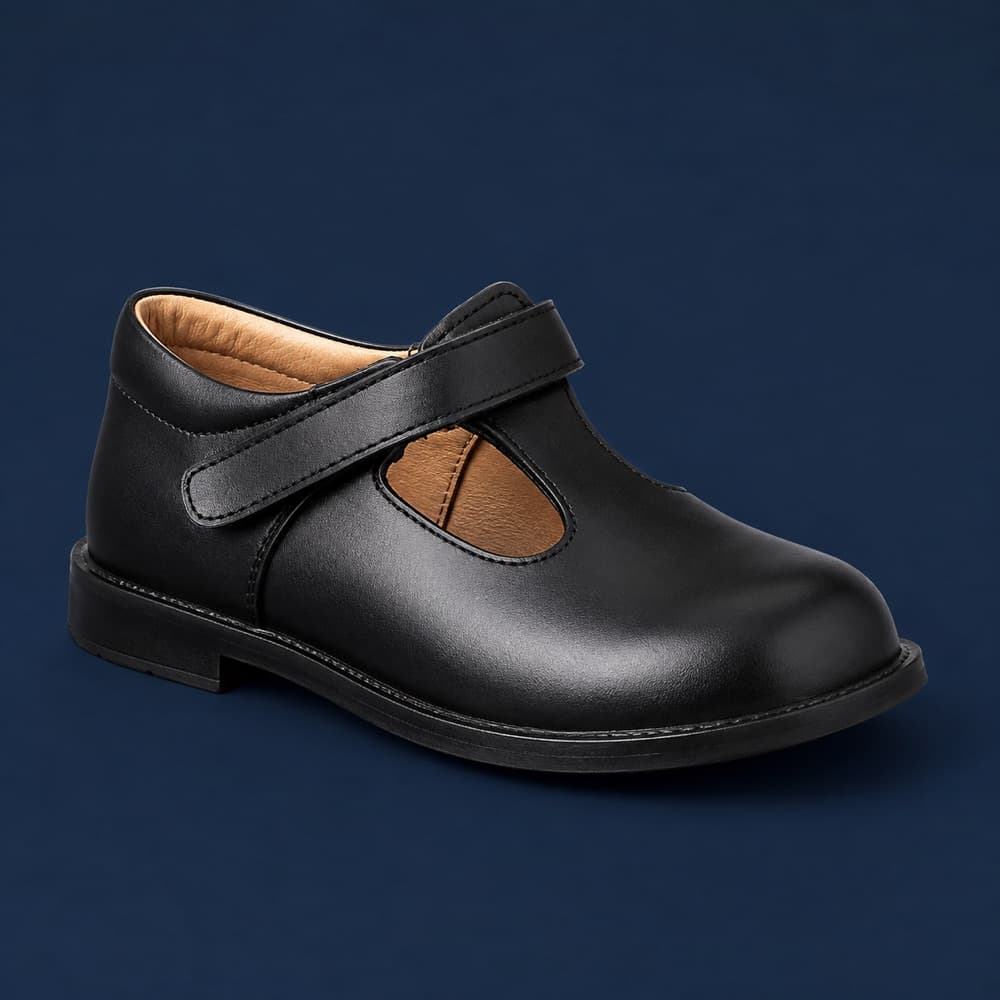
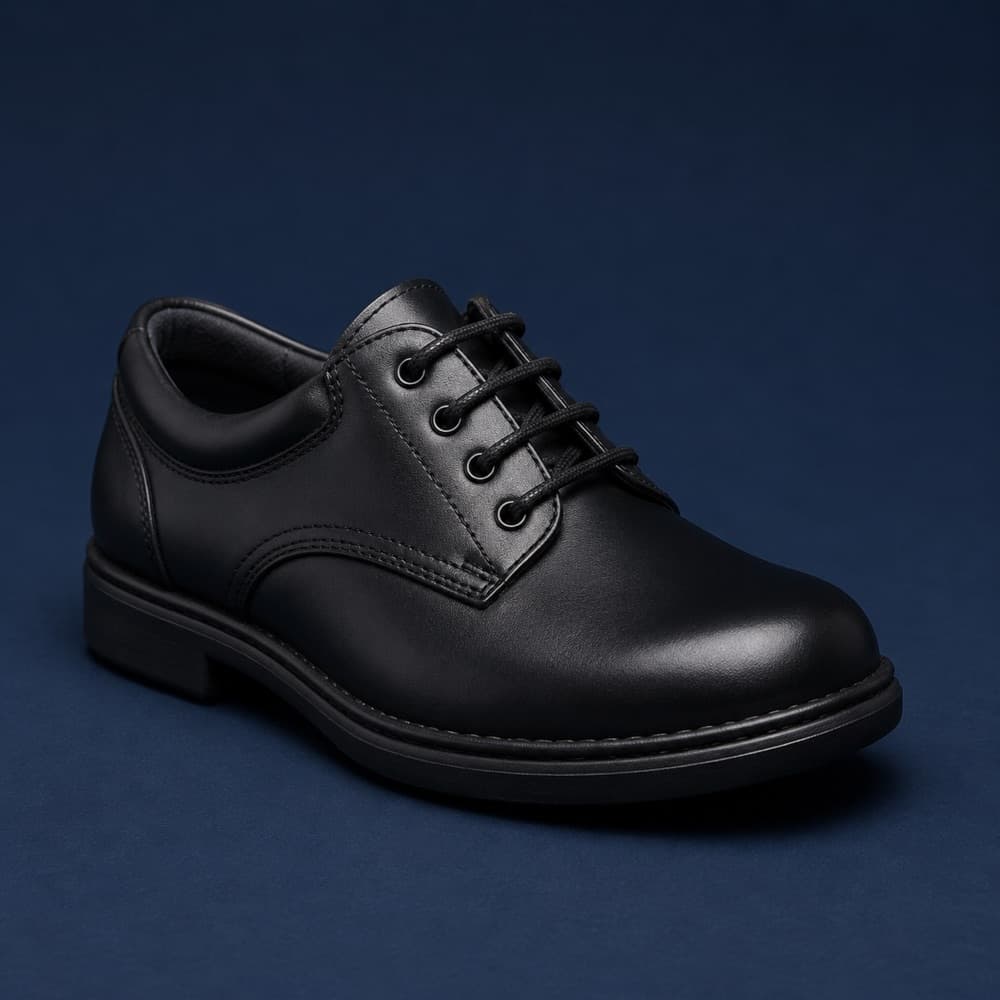
The best materials in the School line: black calf leather upper and lining, a leather-edged 12 mm outsole at about 35°, four pairs of metal eyelets and flat laces capped at 75 cm. Clean lines, no punching, no pattern.
Pick a size to see the inside length and the room it leaves.
School Premium controls
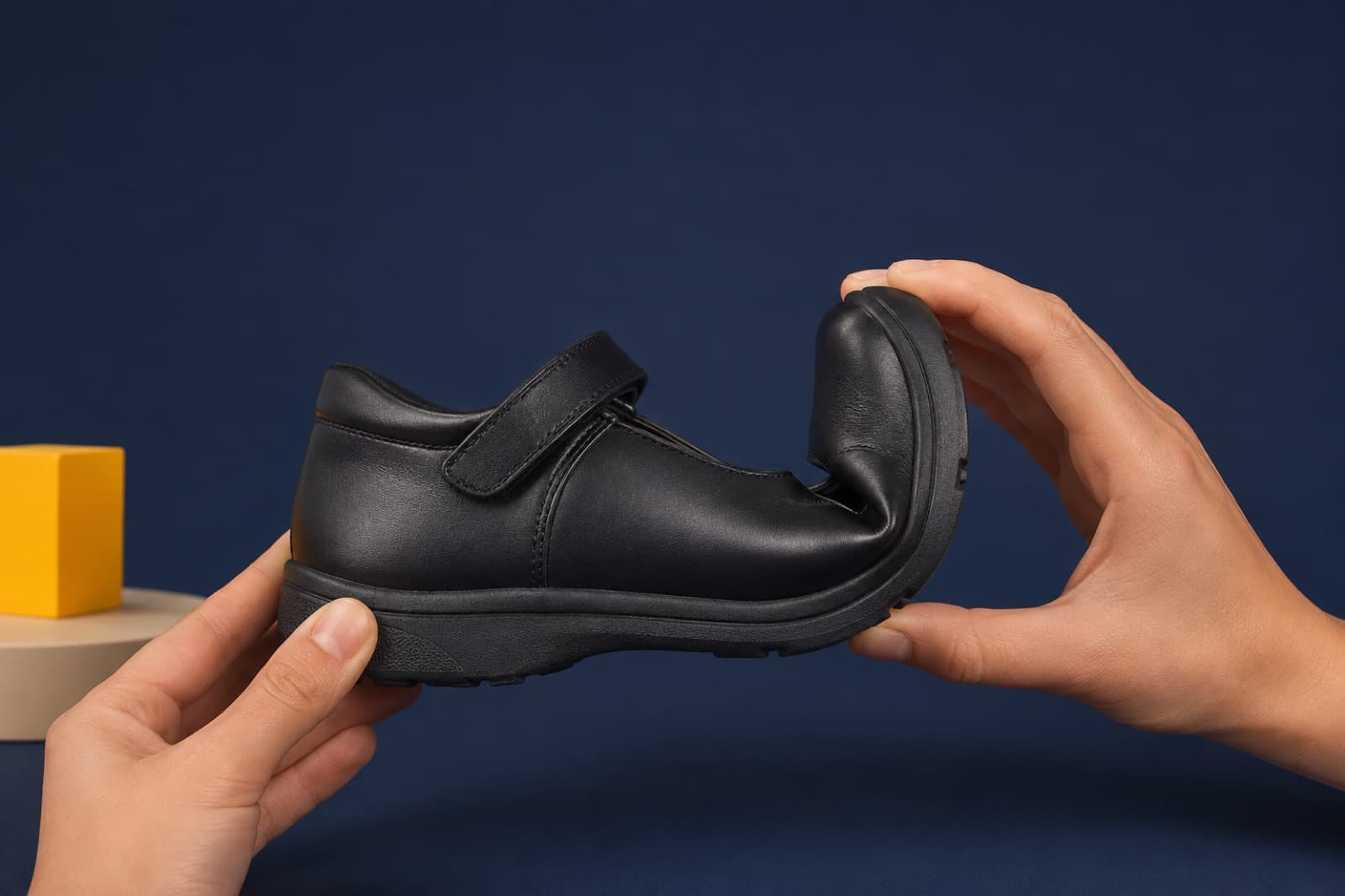
- Sole bends to
- 35°
- Sole thickness
- 12 mm
- Tread depth
- 3 mm
- Growing room
- 12 mm
- Weight, one shoe
- 256 g
- Closure
- Laces
- Forefoot width
- 88 mm
- Made for
- 6 years–12 years
- Sizes
- EU 30–38
Weight note. Weighed as a single shoe in EU 34.
- No attached decorative parts — no buttons, beads, pom-poms or badges.
- No cartoon, character, film tie-in or third-party trademark anywhere on this pair.
- Covered by the 3-year legal guarantee under Portuguese law. What counts as a defect
What it is made of
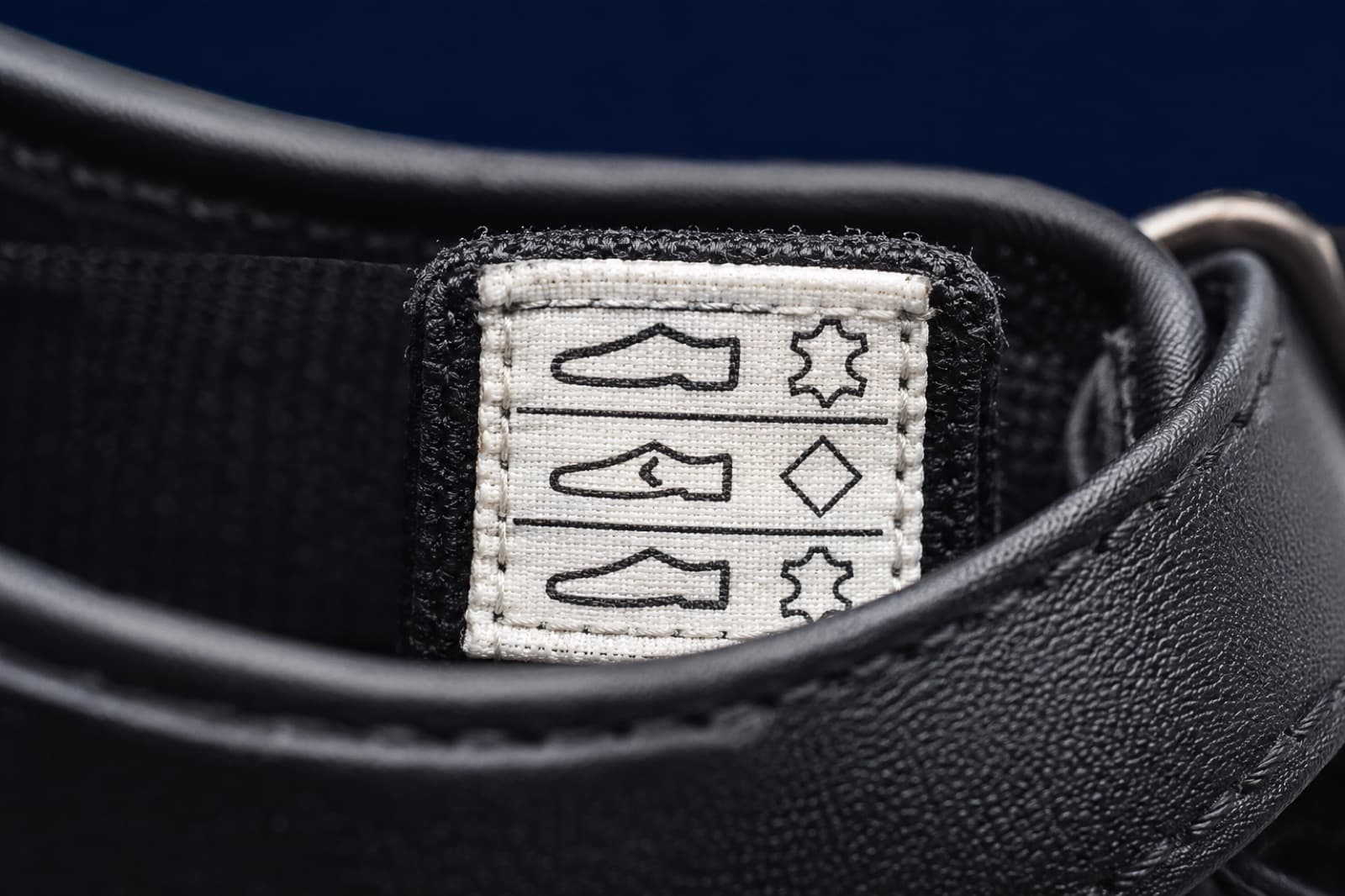
The three rows below are the legal footwear label required across the European Union. They are printed on a label inside the shoe as pictograms, and written out here in words so nobody has to decode a symbol to know what they are buying.
Country of manufacture is stated on the label sewn into every pair and on your invoice. We do not use origin as a marketing claim.
| Part | Category | Material |
|---|---|---|
| UpperParte superior | leatherCouro | Calf leather, chrome-free tanned |
| Lining & insoleForro e palmilha | leatherCouro | Calf leather lining over leather-covered EVA insole |
| OutsoleSola | other materialsOutros materiais | Rubber compound with leather edge, 12 mm |
Each row names the material that makes up at least 80 % of that part. Where no material reaches 80 %, the two main ones are named. Couro is used only where a part is leather in the legal sense — hide from an animal. A coated or synthetic material is never described as leather.
The five chemical checks
Children’s footwear is held to tighter limits than adult footwear on all five of these. Where a restriction has nothing in this pair to apply to, the row says so instead of going blank.
| Restriction | Limit | Method | Status |
|---|---|---|---|
| Chromium VI in leatherEvery leather batch is tested before it is cut. REACH Annex XVII, entry 47. | ≤ 3 mg/kg | EN ISO 17075-1 | Tested per batch |
| Azo dyes — releasable aromatic aminesApplies to every dyed component that touches skin. REACH Annex XVII, entry 43. | ≤ 30 mg/kg | EN ISO 14362-1 (textile) / EN ISO 17234-1 (leather) | Tested per batch |
| Nickel release from metal partsEyelets and buckles are tested after the artificial wear and corrosion pre-treatment. REACH Annex XVII, entry 27. | ≤ 0.5 µg/cm²/week | EN 1811 | Tested per batch |
| Phthalates in plasticised partsNo plasticised PVC component in this pair, so the phthalate restriction has nothing to apply to. | DEHP + DBP + BBP ≤ 0.1 % by weight | EN 14372 / ISO 14389 | Not applicable |
| Free formaldehyde, parts touching skinLinings and insoles are tested because they sit against the foot for hours at a time. | ≤ 16 mg/kg | EN ISO 14184-1 | Tested per batch |
All five checks are resolved on every product before it can be listed. Where a restriction has nothing to apply to, we say so rather than leaving the row blank. Batch test reports are available on request at support@poderinfantilshoes.homes.
Every size, and the foot it fits
The gap we leave in front of the longest toe. Part of it is working room for a stride, part of it is a few months of change. It is not a bet on how fast a child will grow. This pair is built around 12 mm.
We publish EU numbers and millimetres only. We do not publish UK or US conversions because they differ between makers, and a conversion table is exactly the sort of thing that puts a child in the wrong shoe.
| EU | Inside length | Fits a foot of | Room left |
|---|---|---|---|
| 30 | 200 mm | 183–188 mm | 12 mm |
| 31 | 207 mm | 189–195 mm | 12 mm |
| 32 | 213 mm | 196–201 mm | 12 mm |
| 33 | 220 mm | 202–208 mm | 12 mm |
| 34 | 227 mm | 209–215 mm | 12 mm |
| 35 | 233 mm | 216–221 mm | 12 mm |
| 36 | 240 mm | 222–228 mm | 12 mm |
| 37 | 247 mm | 229–235 mm | 12 mm |
| 38 | 253 mm | 236–241 mm | 12 mm |
How we measured 35°
Measured by hand, not by machine: hold the heel flat, press the toe upward until the sole resists, and read the angle between the flat sole line and the lifted forefoot. Every batch is checked the same way, at 20 °C, by the same person. A larger angle means the sole folds more easily.
Keeping it clean
Calf leather wants cream rather than polish, and a shoe tree overnight.
What we will not claim
This pair carries no water resistance rating, so we make no claim about wet weather. Where a pair does have one, the test conditions are printed next to it.
We describe how our shoes are made. We don't give advice about your child's feet. If you have concerns, ask a healthcare professional.
Trying them on
Indoors, on carpet, with the sock they will actually be worn with. You have 14 days to change your mind. The one thing that stops a return is outdoor wear on the sole, and we would rather say that here than after you have posted them back.
Not sure it is the right pair?
Write to support@poderinfantilshoes.homes or call +351 256 871 538 with the foot length and we will tell you plainly whether we make something that fits, including when the answer is that we do not.
Monday to Friday, 09:00–18:00 (Europe/Lisbon). We reply to email within one business day.
Others in School Shoes
 C-0135° flex
School Shoes
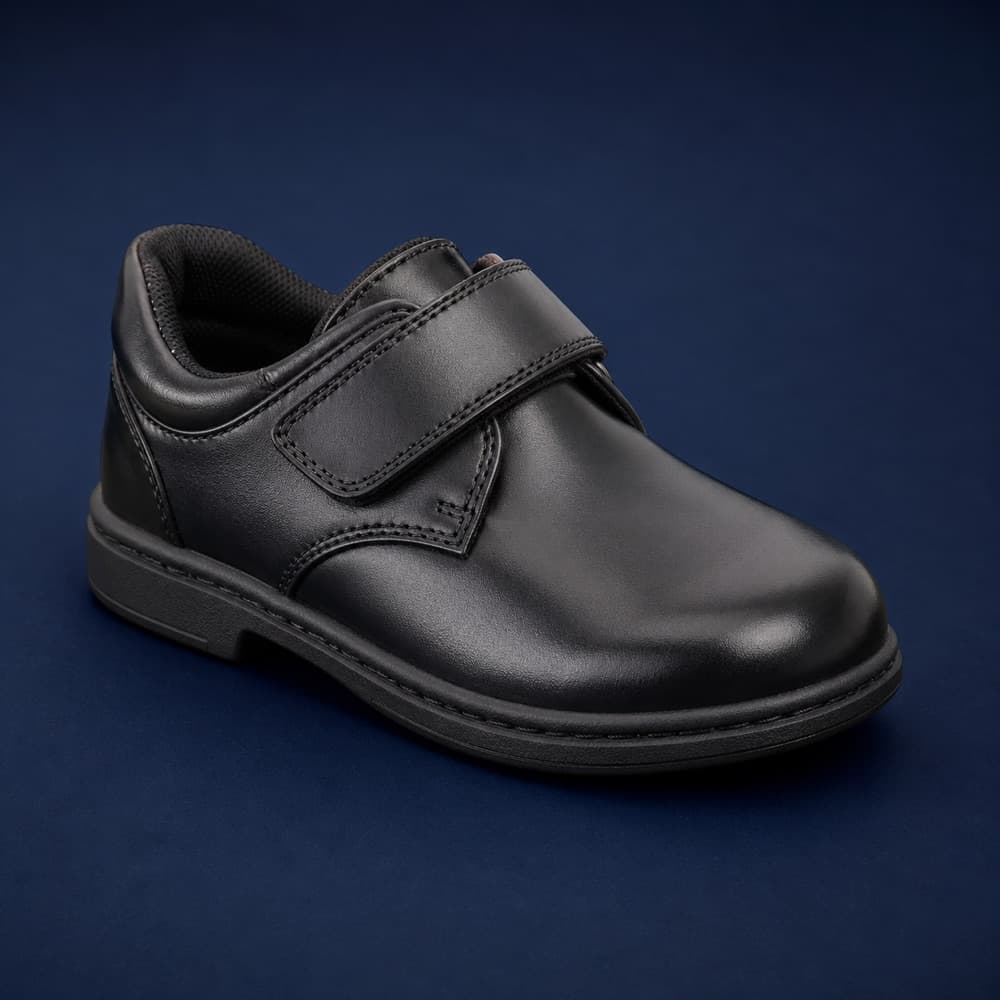
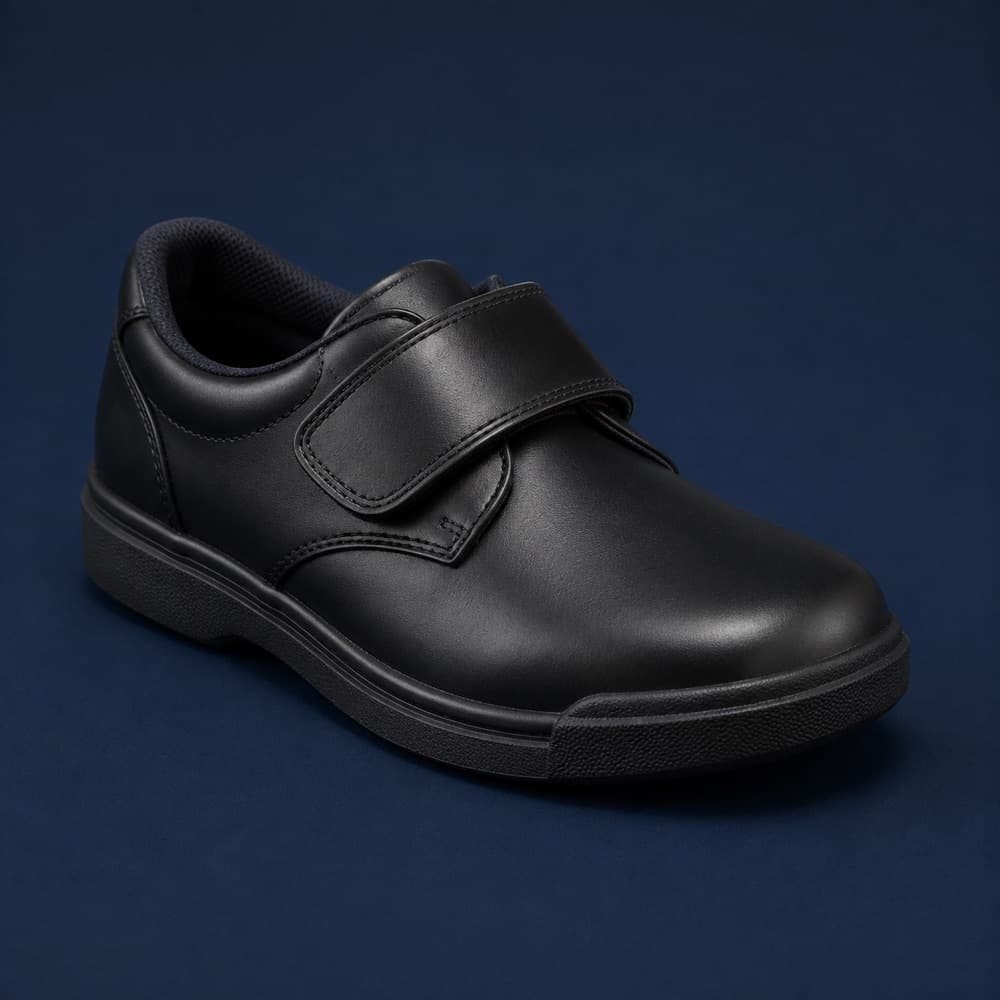
School Classic
Black leather, one strap, five days a week.
 C-0235° flex
School Shoes
School Lace
Three eyelet pairs, laces capped at 75 cm.
 C-0335° flex
School Shoes
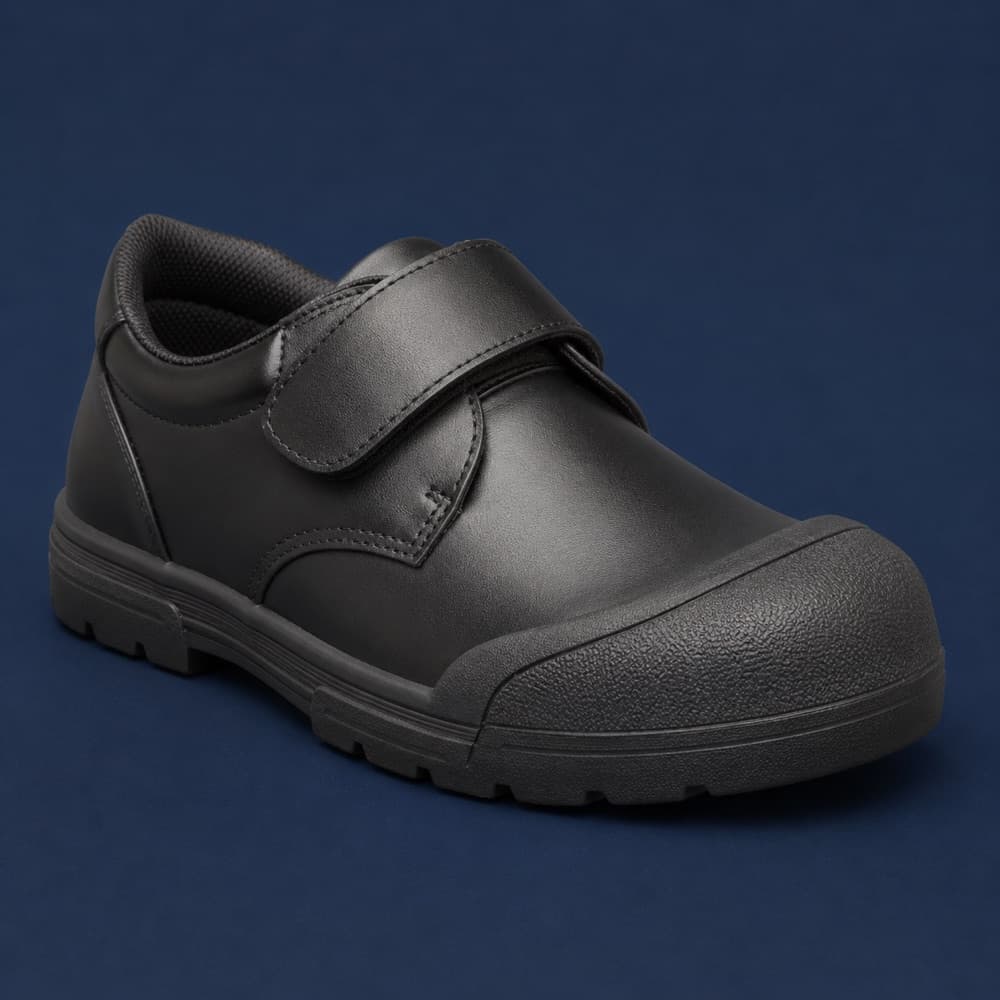
School Scuff Guard
A 3 mm rubber layer wrapped over the toe.
 C-0435° flex
School Shoes
School Wide Fit
96 mm across the forefoot instead of 88 mm.